
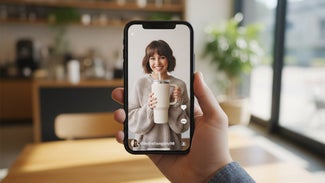
Did you drink water today? And more importantly, did you drink it from a Stanley cup?
Once most likely to be spotted in your grandpa’s work bag, Stanley cups hit peak collectibility in January 2024, when a bubblegum pink limited edition Starbucks version that was sold exclusively at Target inspired crowds of young women to line up overnight for the chance to grab one.
This is the story of how Stanley’s audience shifted from burly to girly, and went viral in the process.
The Merch

A Stanley cup is a large, shiny trophy that’s given to the team that wins the National Hockey Lea- oh, wait, no, that’s the Stanley Cup. The Stanley cups we’re talking about are vacuum-insulated steel tumblers made by drinkware company Stanley.
Specifically, we’re talking about a model of cup called the Stanley Quencher. It holds a gargantuan 40oz of liquid, and it has a narrow bottom that fits in a standard car cup holder. It’s got a big rectangular handle and a twist-on lid with a straw.
You may have seen them in Target, your workplace, in your kid’s middle school, or basically anywhere populated by people who are into hydration (or trendy homeware goods.)
Oh Yeah, My Grandparents Have a Stanley
They may well do! Unless you have particularly outstanding genes in your family, Stanley is older than your grandparents. The very first Stanley cup was made all the way back in 1913.
Stanley got its name from its founder, William Stanley Jr. His big breakthrough was figuring out how to make vacuum-insulated bottles out of steel rather than glass. The vacuum part is important because it prevents heat getting into a cold drink or out of a hot drink. The steel part is important because it’s stronger than glass – especially since the vacuum spaces in the original Stanley cups were reinforced with charcoal dust. Gritty.
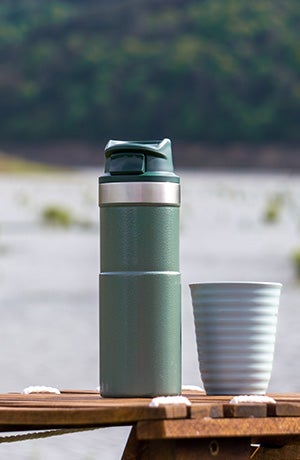
Durability and temperature stability immediately became Stanley’s big selling point. They made hard-wearing sturdy drinkware that was built to last, for hard-working sturdy workers. (In 1913, that predominantly meant men. This will be important later.) There are a lot of stories about Stanley cups being pulled from the wreckage of fires, being run over by trucks, being dropped from planes, and not only surviving intact but still holding hot coffee. They were supposedly the thermos of choice for the U.S. military in World War II.

When Did Stanley Get Trendy?
Let’s jump forward 103 years, from 1913 to 2016. That was the year Stanley put out the Quencher. It didn’t take off with Stanley’s mainly male audience, but a year later, Stanley met Ashlee, and things changed.
Ashlee is Ashlee LeSueur, one of the founders of online shopping blog The Buy Guide, and the original Stanley Quencher stan. She bought a Quencher at a Bed, Bath, & Beyond in 2017 and immediately realized that it met all her water bottle needs. Mainly, it held a lot of liquid at the right temperature for hours, fit in her car cup holder, and was easy to sip from in traffic.
LeSueur began sending Quenchers as gifts, first to friends and family, then once The Buy Guide was up and running, to influencers. Those influencers posted videos of themselves unboxing their Stanley cups and raving about how great they were.
People at Stanley noticed these videos. They made a deal to let The Buy Guide buy 5,000 Quenchers (white with black handles) at cost to sell at full price. The risky move for a small company paid off, with the tumblers selling out in days, and even faster the next few times.
However, Stanley wasn’t entirely thrilled that what they saw as their Big Tough Drinkware for Big Tough Men was being co-opted by young women. It wasn’t until 2020, with a new Stanley president, that the company started actively working with The Buy Guide team to reorient the Quencher to a female audience.
Stanley started introducing more color options, so that people could match their Stanley to their outfit. They doubled down on sending Quenchers to influencers to keep the momentum up online. (If you want to see how that went, look up #StanleyTumbler on TikTok.)


They also collaborated with other brands their newfound audience liked – mainly Target and Starbucks – to release limited edition cups. This led to those previously mentioned Black Friday-type scenes of people lining up for hours outside Target stores, ready to charge in and grab their Stanleys the second the doors opened. Multiple of these limited editions sold out within minutes, and with retail prices at around $50, they were listed for around $200 on resale sites.
All this literally paid off for Stanley: Their revenue climbed from $70 million in 2019 to $750 million in 2023.
What Made the Stanley Quencher Such a TikTok Hit?

Sending Quenchers to influencers got the bottle a lot of coverage – although that wasn’t enough on its own.
Influencers get a lot of stuff for free, only some of which they show off in their videos, and very few of even those products go viral. To stand out, the products have to be really good at what they do, and as LeSueur had already realized, the Quencher fit a lot of needs that other water bottles didn’t.
It also helped that the Stanley’s rise coincided with the rise of WaterTok. No, it’s not a new water park: It’s the part of TikTok where people share water recipes, water-related accessories, and water “wellness” tips, all of which are supposed to improve hydration or at least help you enjoy the taste of water.
WaterTok might sound intense, but it’s just one (exaggerated) aspect of a trend that has reached a lot of people. We spend a lot more time worrying about drinking enough water than we used to even in 2017, when LeSueur picked up her first Quencher. This was good news for Stanley, since it meant that in addition to appealing to the hydration devotees of WaterTok, it could also reach people who just wanted a water bottle that held enough liquid for a few hours at a reasonable temperature, and fit in their cupholder. (Whether they ultimately chose to fill it with iced coffee instead is between them and their god.)

Stanley’s appeal was never just about hydration, however. Once Stanley started putting out Quenchers in designs for their new audience and limited editions, they became a lifestyle item – a sign that you were in on the latest fashion. The most obsessive Stanley brand fans turned into another type of purchaser: the collector. For these people, Stanley served less as a water container and more as a trophy. (Oh the irony.) And all of these interactions were documented on TikTok, for more future Stanley stans to find.
Why This Water Bottle?

You don’t have to spend $45 for a water bottle – and you definitely don’t have to keep spending $45 over and over for the same water bottle in a different color. So why did people keep choosing Stanley over any other brand?
It’s a Great Product
The Stanley craze may have missed the point of the original Stanley cup: ice hockey. No, no: durability. Instead of a cup to last a lifetime, they started collecting cups to last several people multiple lifetimes. However, they did understand that they were buying a great quality product that did its job really well. That fact got Stanley in the door at The Buy Guide and with influencers: and it learned not to waste that great first impression.
Stanley Gave Its Customers What They Wanted
Once Stanley embraced their new audience, they did a great job learning what they wanted: new colors! Collaborations! Limited editions! Diamantes! This is what turned the cups from a one-off must-have to a collector’s item.
The Stanley Quencher Fit Into a Lot of TikTok Spaces
The Quencher fit in with the rising tide of WaterTok – but since everyone needs to drink water, it also found a broader appeal among lifestyle influencers, especially once the new colors came out. Products that go viral often aren’t complicated: they’re one brand’s version of something everyone needs.
An Affordable Luxury
In 2025, someone pitching a $45 water bottle as a viral trend would probably be met with cries of, “In this economy?” But when Stanley hit peak popularity in 2023/early 2024, the U.S. economy was on a high point, with decent growth and steady inflation. The idea of paying $45 for a bottle famous for lasting decades did not seem as outlandish a prospect. If anything, it was a smart investment.
The Bottom Line
Stanley accidentally made a water bottle that appealed to young women, and once it accepted that new audience and started designing with them in mind, the Quencher transformed from something for those in the know to an essential lifestyle item for the fashionably minded. And while the fad has cooled down, your coffee is probably still hot.

Natasha Lavender
Natasha is an experienced writer and editor who has covered topics including technology, health and safety, business, and pop culture. Her work has been published by Good Housekeeping magazine, Forbes, Success, and more.


![How It’s Made: The Ins and Outs of Injection Molding [VIDEO]](https://www.qualitylogoproducts.com/blog/wp-content/uploads/2015/08/injection-molding-1-640x360.jpg "How It’s Made: The Ins and Outs of Injection Molding [VIDEO]")
