What do mouse pads, novelty erasers, and sticker sheets have in common? They all make great promos, yes, and they’re all made using die cutting!
Despite the confusing name (no dice are involved, sorry), die cutting takes a simple concept and maximizes its efficiency to adapt to a genuinely surprising range of products. If you’ve been known to break out the baking equipment, you’ve probably already tried a type of die cutting yourself.

What Is a Die?
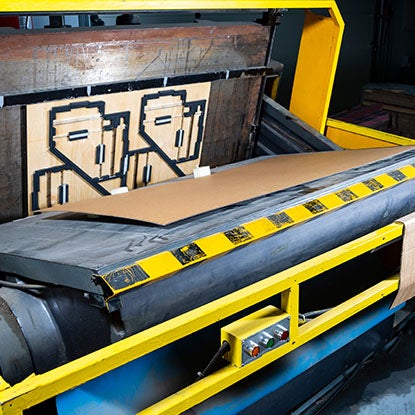
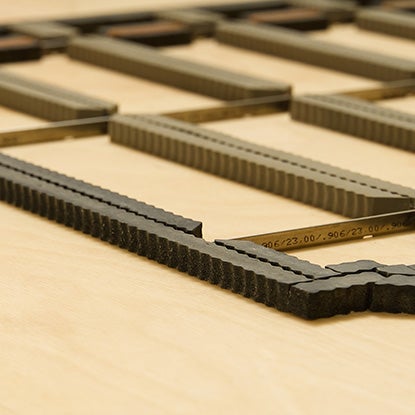
A die in this context is a blade, not the thing you roll to play board games or craps. It looks like a cookie cutter, but with rubber guards surrounding the sharp blades (called ejection rubber) – we’ll explain what they do in a second.
While we’re out here naming things, the thing you’re cutting is called a substrate, and the material that’s left over is called the matrix.
How Die Cutting Works
It’s like when you cut out cookies with cookie cutters, but less delicious. (Although some factories that make cookies use die cutters.)
Die cutting is basically pressing down a blade (the die) that’s been formed into the shape you want onto the material you want to cut out (your substrate), and then separating that cutout part you want to keep from the leftover material (the matrix.)
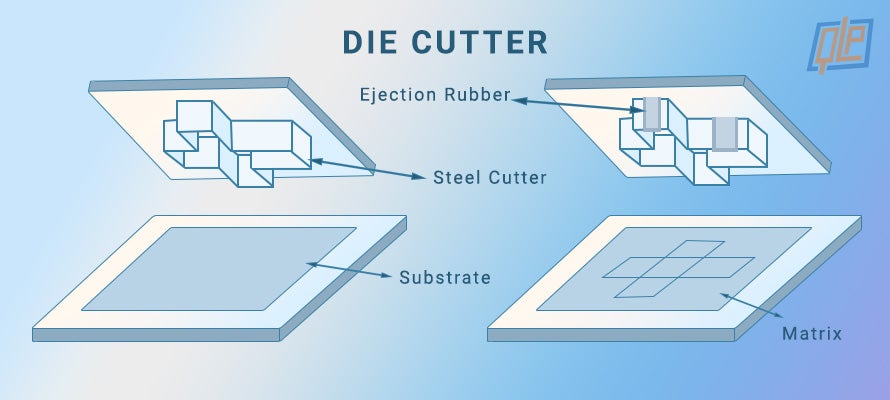
“What about the ejection rubber?” I hear you ask if you were paying attention earlier. When the die is pressed down, the rubber guards compact on either side of the rigid blade as it cuts into your substrate. Once the cut is made, you raise the die, and as the pressure eases, the rubber guards come back out and help push the substrate away from the matrix. In other words, they help separate the bit you want to keep from the waste bit.
You know when you cut out cookies and the dough sticks to the cutter? The ejection rubber helps avoid that problem, which is crucial when you’re cutting things on a speeding conveyor belt.
Why Die Cutting Is So Useful
Why use die cutting instead of any of the other ways one could cut things out? Die cutting is good at some niche yet useful tasks, and it performs them reliably, for relatively low cost.
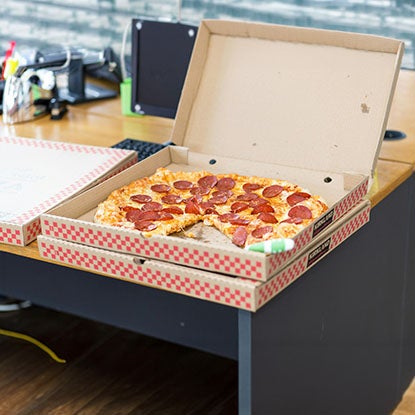
Once you have the blades in the right shape, you can cut that shape out over and over, exactly the same every time. Also, die cutting machines have more than one cutting option. They can score creases to make fold lines – like in pizza boxes or these models – without cutting all the way through the substrate.
Die cutters can even cut through some layers of the substrate but leave others. Called kiss cutting, this is how sticker rolls or sheets are cut out – to give you an idea of the precision involved. Some of our die cut products include plastic bags, erasers, magnets, mouse pads, stickers, jigsaw puzzles, and probably others we’ve forgotten to mention.

Types of Die Cutters
Since die cutting can be used for so many things, it makes sense that there are a bunch of different types, including:
-

Flatbed Cutters
A flatbed cutter looks like a flat sheet with blades attached – imagine if someone made a 3D model of a maze (out of blades surrounded by rubber walls.) It gets pressed straight down onto the substrate, like a giant, sharp stamp.
-
Rotary Die Cutters
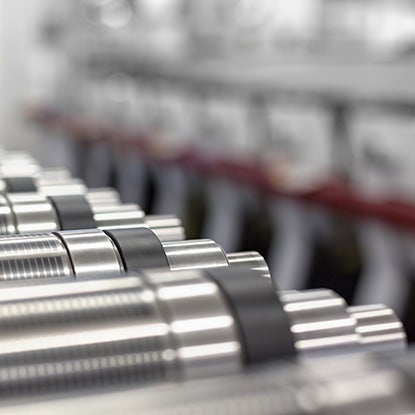
In these, the die is attached to a big metal roller that rolls over the substrate as it goes down the conveyor belt, cutting into it as it passes below. There are two different ways to attach the die:
-
Bits of the roller itself are cut away to make the shape you want.
-
The blades are attached to flexible thin steel sheets that you can add or remove from the magnetic cylinder.
The first kind is extra durable, but it only makes one design. With the second, you can use the same cylinder for multiple designs.
-
-
Punches
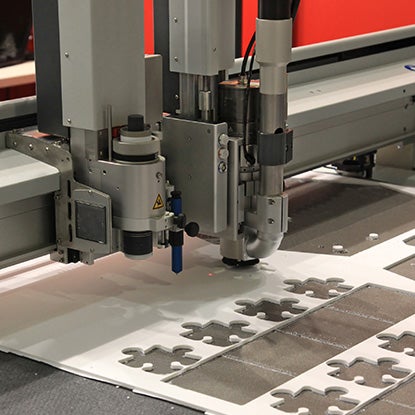
Imagine an industrial-powered hole punch! This is how we make the handles on our die cut bags, for example.
How to Die-Cut a Mouse Pad
Now you’re got the background info, let’s put it all together and look at the manufacturing process:
-
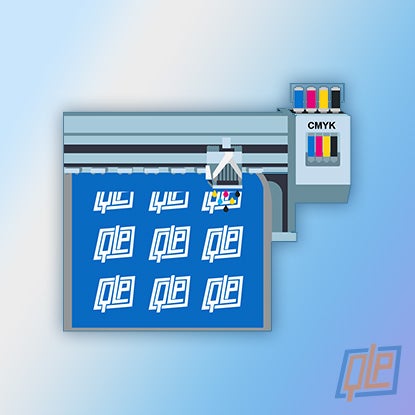

The material the mouse pads will be cut from is customized using heat transfer or full-color sublimation printing.
-
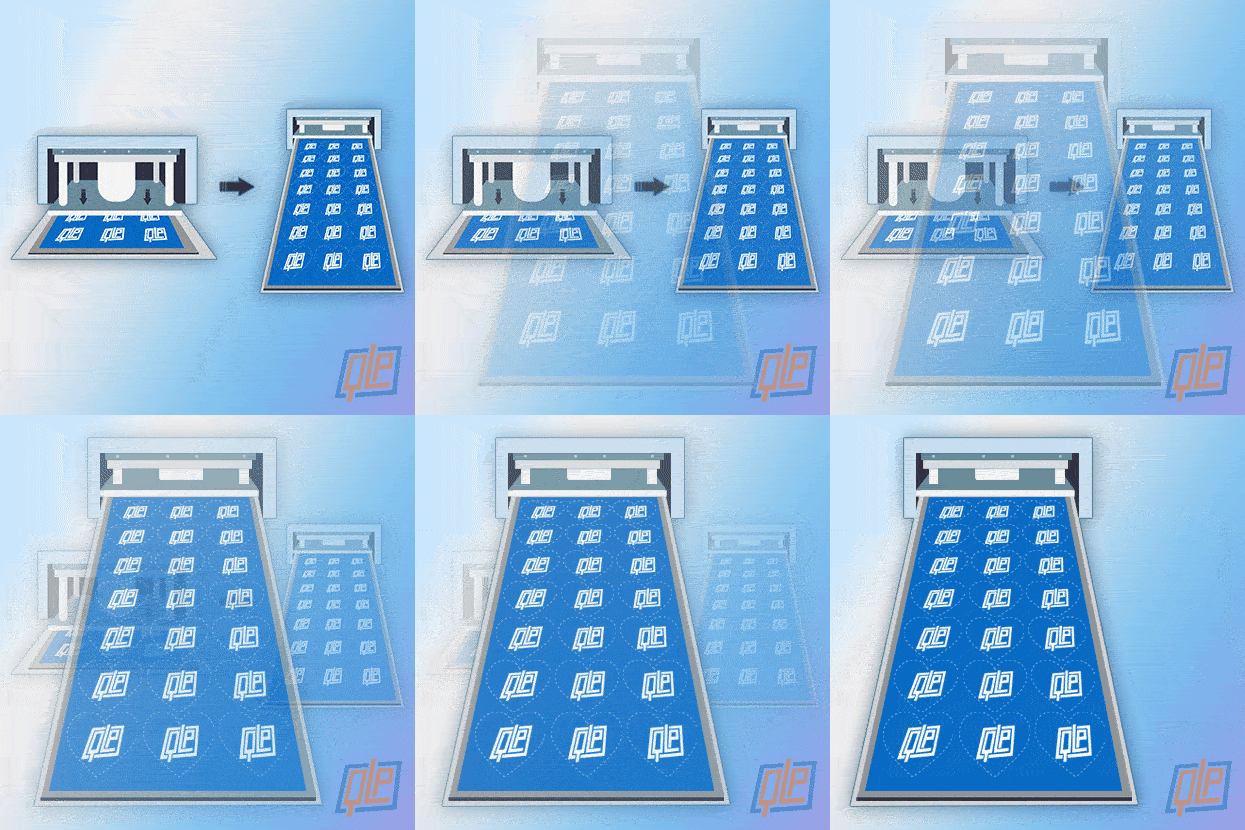
As your substrate rolls along the conveyor belt, the die comes down and stamps out your shapes.
-
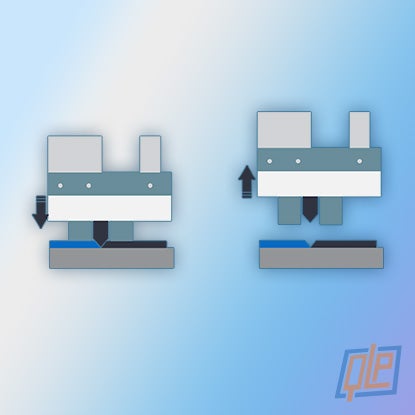
As the cutter lifts, the ejector rubber is released and pushes the substrate away.
-
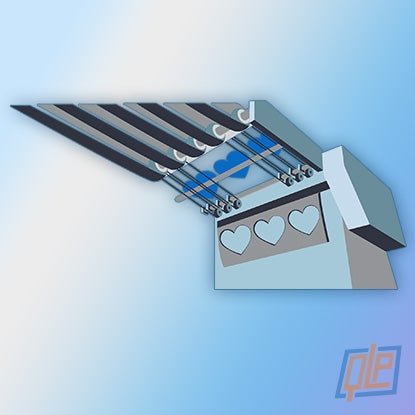
The now-cut substrate is pushed forward over something called a stripping unit, which separates the leftovers (the matrix) from the substrate.
-

Your mouse pads are ready!
The Bottom Line
Now you know what die cutting is, you’ll probably see examples of it all over our website and in the wild. Next time you order pizza, make sure you marvel at those perfect creases: you can thank die cutting for that. (It doesn’t have to be out loud, that might scare people.)
Natasha Lavender
Natasha is an experienced writer and editor who has covered topics including technology, health and safety, business, and pop culture. Her work has been published by Good Housekeeping magazine, Forbes, Success, and more.