
Your favorite coffee mug is a feat of engineering.
People have been making mugs since the first person got tired of walking to the nearest stream every time they wanted a drink. (We suspect that was the motivation, anyway.) We’ve perfected the techniques since then, to the point where we’re able to have machines do the hard work for us, manufacturing dozens or even hundreds of mugs in an hour.
Find out what that looks like for four of our most popular types of mugs. And if you’d like to get to grips with the different mug materials, we have a blog post for that.

Ceramic
Ceramic mugs are made of clay that’s glazed and heated to make it strong and shiny: Think of your favorite promo coffee mug that you’ve had for years. If you look after them, they’re pretty tough. (See our mug drop test for proof!)
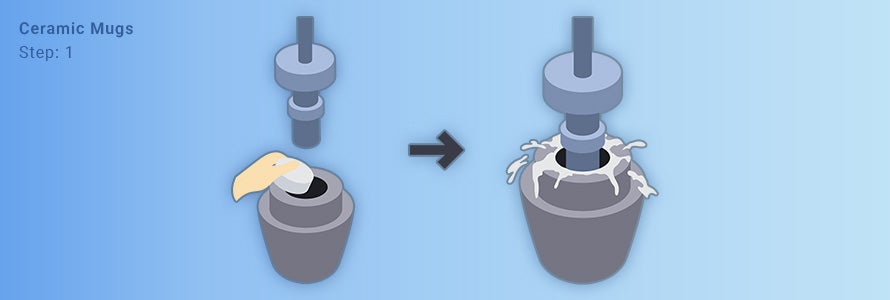


- The ball of clay goes into a mold, then a big cylinder pushes down and forces it into the shape of a hollow tube with a flat base.
- Any rough bits are smoothed out while the mug is still malleable.
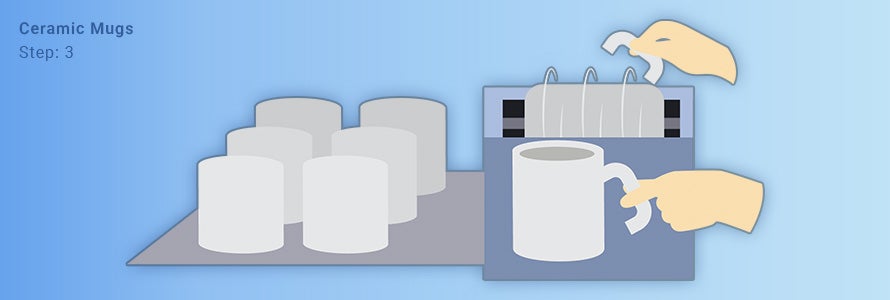
- Wet clay is added to the handle and side of the mug, and those bits are joined together.
- Once the mug is dry, it’s dipped into glaze, then fired in a kiln to make the glaze shiny and hard.
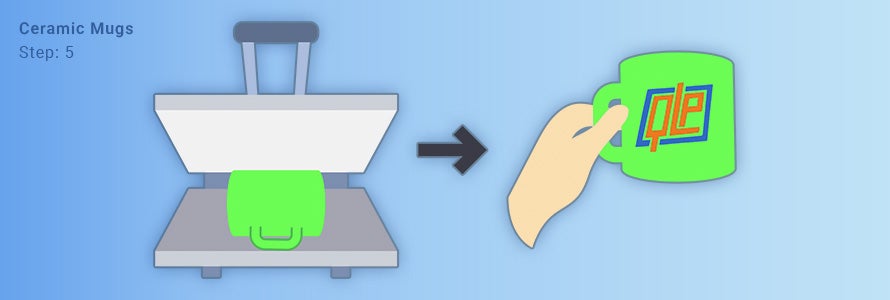
- Your design is applied using full-color heat transfer paper (pictured), pad printing, or screen printing.
Video
Check out our video!
Enamel
The enamel part of enamel mugs is the hard, often speckled coating on the outside, while the mug itself is metal. You’ve seen them in the wild in the form of classic camping mugs.
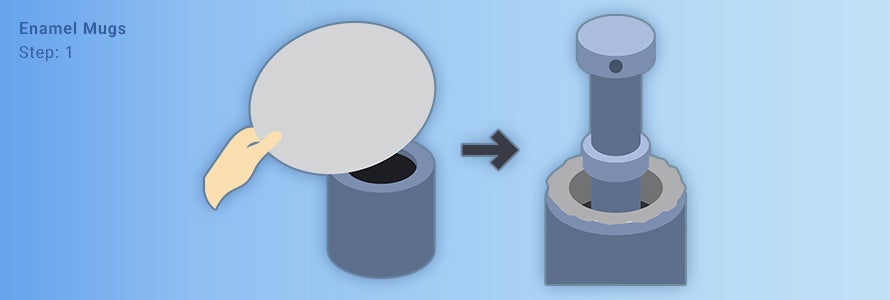
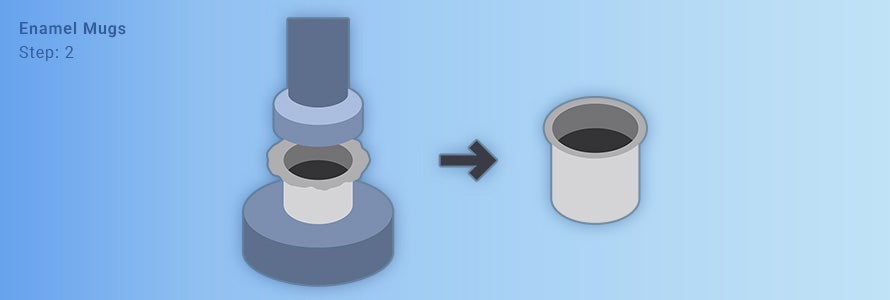
- A round, flat sheet of metal goes on top of a mold, and a giant cylinder comes down that forces it into the shape of a tube with a flat base.
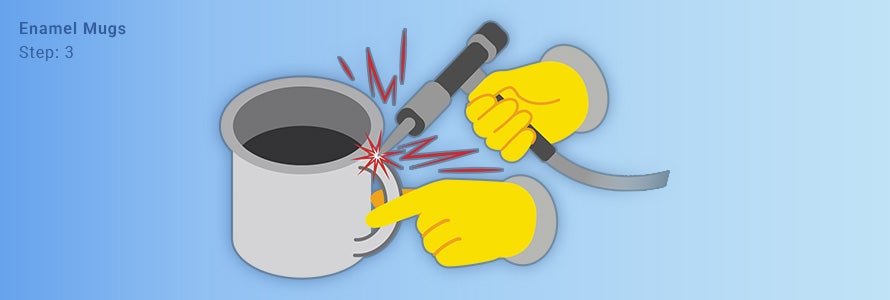
- A machine trims the sharp edges off the brim.
- The metal handle is welded onto the mug.
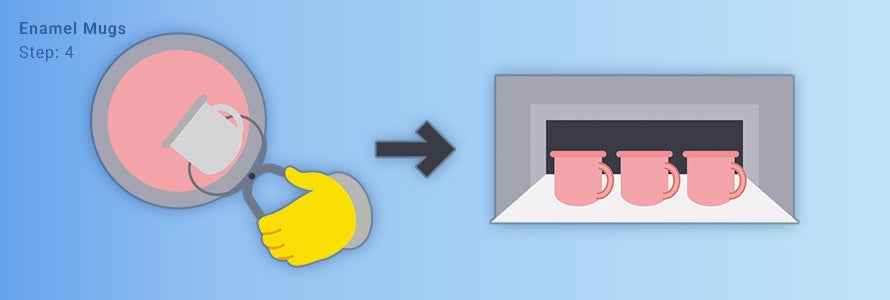
- The enamel coating is added and once dry, the mug is fired in a kiln.
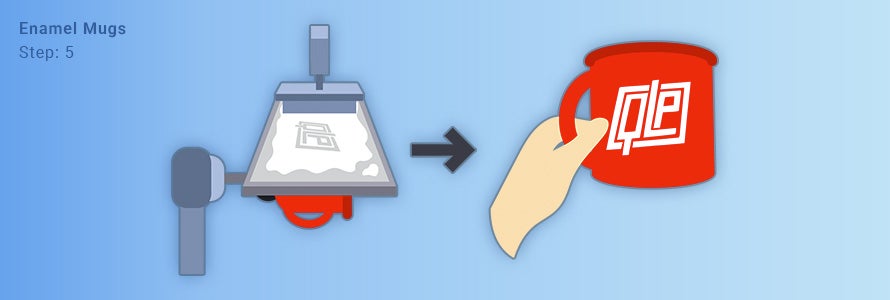
- Your design is added with screen printing (pictured) or full-color heat transfer printing.
Glass
Essentially a drinking glass with a handle – but often made from a tougher type of glass that’s less likely to break in response to temperature swings. Glass mugs work great for showing off your latte-making skills on TikTok.

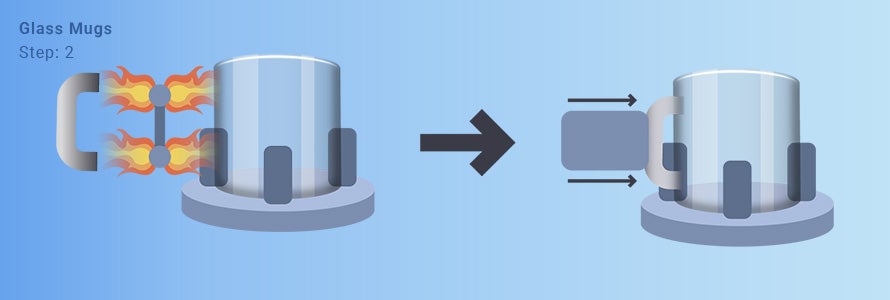


- The molten glass is put in a big mold, then a big cylinder (you guessed it) comes down and forces it into the shape of a tube with a flat base.
- Fire is applied to the glass handle and the side of the mug to make them slightly molten, and the two are joined together.
- The mug is put under a flame to slightly melt the top layer of glass, making it look shiny when it dries.
- Your design is added with laser etching (pictured) or screen printing.
Plastic
There are lots of types of plastic, and plastic mugs are usually made from either acrylic (PMMA) or polypropylene (PP, resin identification code 5). These mugs are lightweight and shatter-resistant.



- Liquid plastic is injected into a mug-shaped mold and cooled to solidify.
- Excess plastic is cut off the mug.
- Your design is pad printed (pictured) or screen printed.
The Bottom Line
The mug-manufacturing process is surprisingly similar across three out of four of our materials: You get a piece of your material and push on it really hard to make it into a tube that has a base. With plastic, you let the mold shape your raw material instead. Ta-dah! The rest of the process is removing any rough bits, attaching a handle, and adding a glaze to protect and decorate. And then, of course, we add your design – and your customers get their new favorite mug.
Natasha Lavender
Natasha is an experienced writer and editor who has covered topics including technology, health and safety, business, and pop culture. Her work has been published by Good Housekeeping magazine, Forbes, Success, and more.